Hand-sewn shoes
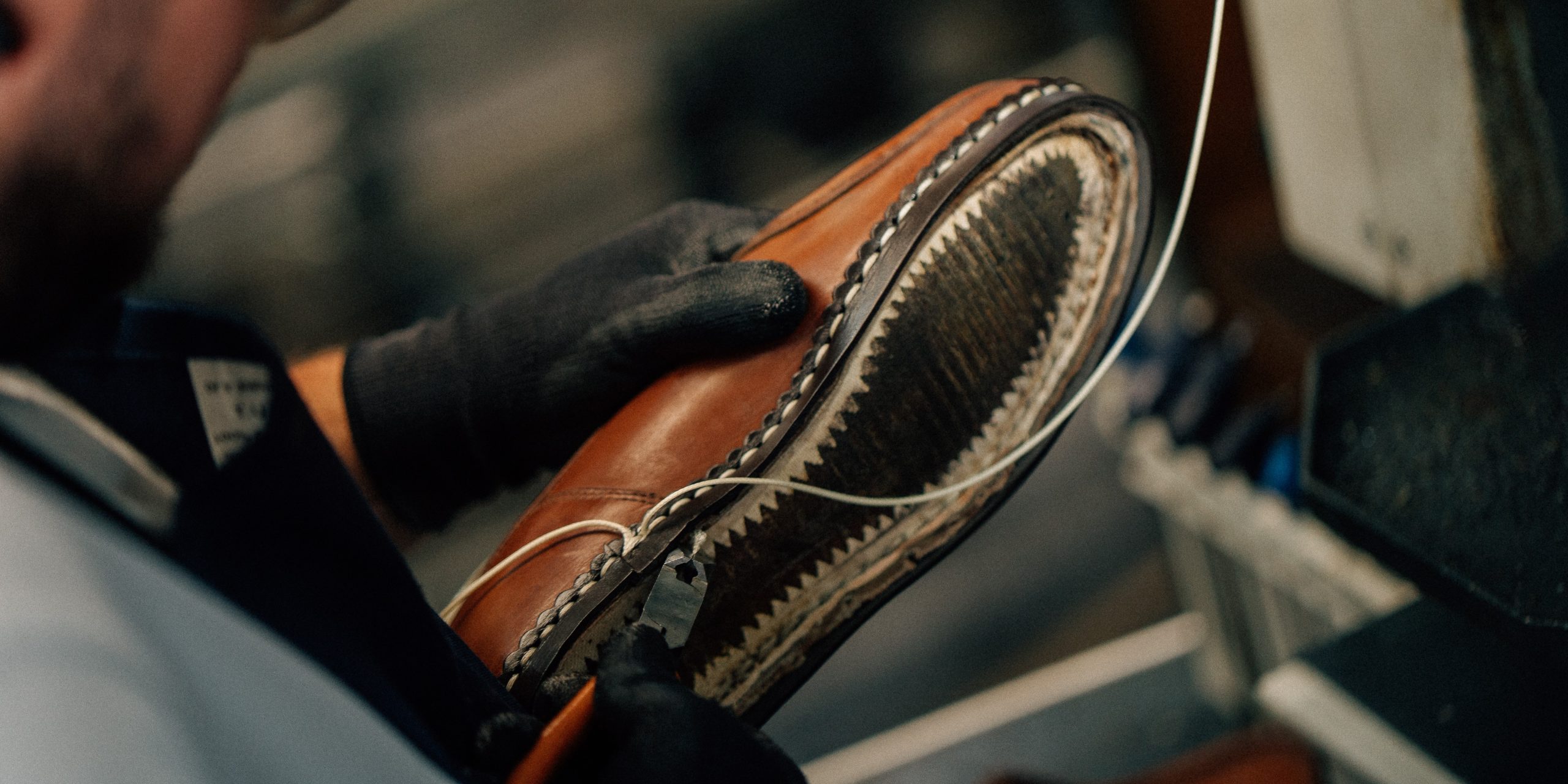
The construction principle behind Blake, Goodyear, and Norwegian-welted footwear involves connecting the upper — the top part of the shoe — to the insole and the sole using a strip of leather known as a welt.

Norwegian construction
Paraboot is the world leader in Norwegian construction.
Principle
The principle is that the upper is fixed to the sole by means of an assembly insole, using a welt and two visible lines of stitches: welt stitching on the upper and lock stitching on the sole. It is also possible not to have a welt, in which case the two lines of stitches are sewn directly onto the leather at the bottom of the upper; this serves as a welt.
History
Norwegian construction was originally used especially for mountain boots and other intensive uses. Nowadays, it’s also used for more casual shoes.
Advantages
Norwegian construction is both strong and flexible, making our shoes sturdy and comfortable. The particular position of the welt makes shoes more waterproof and durable. By the way, this technique has several different names (another is “Rovescia”, “storm welted”) and has nothing to do with Norway!

Goodyear construction
Goodyear construction is more refined than Norwegian construction, and just as strong.
Principle
The upper is fixed directly to the sole by means of an assembly innersole, a welt and 2 rows of stitches, of which only one is visible: the lock stitching on the sole.
History
Goodyear construction is traditionally used for luxury shoes and/or dressed shoes.
Advantages
A more sophisticated line. A construction method that is nevertheless sturdy and waterproof. By the way, Goodyear construction (which was invented in 1865) is named after the inventor of the machine used, Mr Charles Goodyear Jr.

The blake sewn
Blake sewn, for greater flexibility and lightness…
Principle
The upper is directly connected to the sole, via a seam that goes all the way through the sole.
History
In 1858, an invention by a young employee of the Singer sewing machine manufacturer caused a small revolution in the world of footwear. It democratized shoes stitched onto leather soles and met with great success.
Advantages
Blake-stitched shoes are lightweight and flexible, especially with a rubber sole. The shoe has a more refined look than Goodyear welted shoes. However, from a technical standpoint, their durability and waterproofing are lower than those of Norwegian or Goodyear welted shoes.
Ready, welt, flesh, upper, full grain… the shoe is a much more technical product than it seems.Would you like to know more about its ‘language’?


