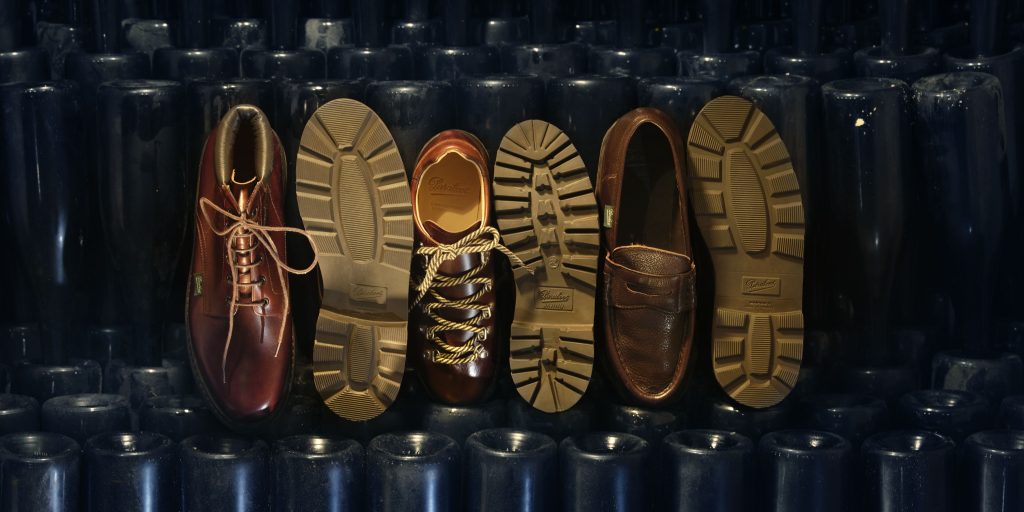
For its Fall-Winter 2026 season, Paraboot continues its “Workers” saga and opens the doors to two exceptional houses: Leclerc Briant, a champagne house based in Épernay, and Ader, a Parisian auction house. These are two worlds that seem worlds apart. Yet, they are united by the same commitment to excellence.
Silent Poetry
Among the Workers, in the realm of exceptional craftsmanship, there is a form of silent poetry an alchemy where time, materials, and expertise come together to give birth to objects that transcend their mere utility. Previously, Paraboot turned its attention to a classic car restoration workshop last season. Now, Paraboot has chosen two places where the focus isn’t just on manufacturing. Instead, it’s about revealing, preserving, and passing on.
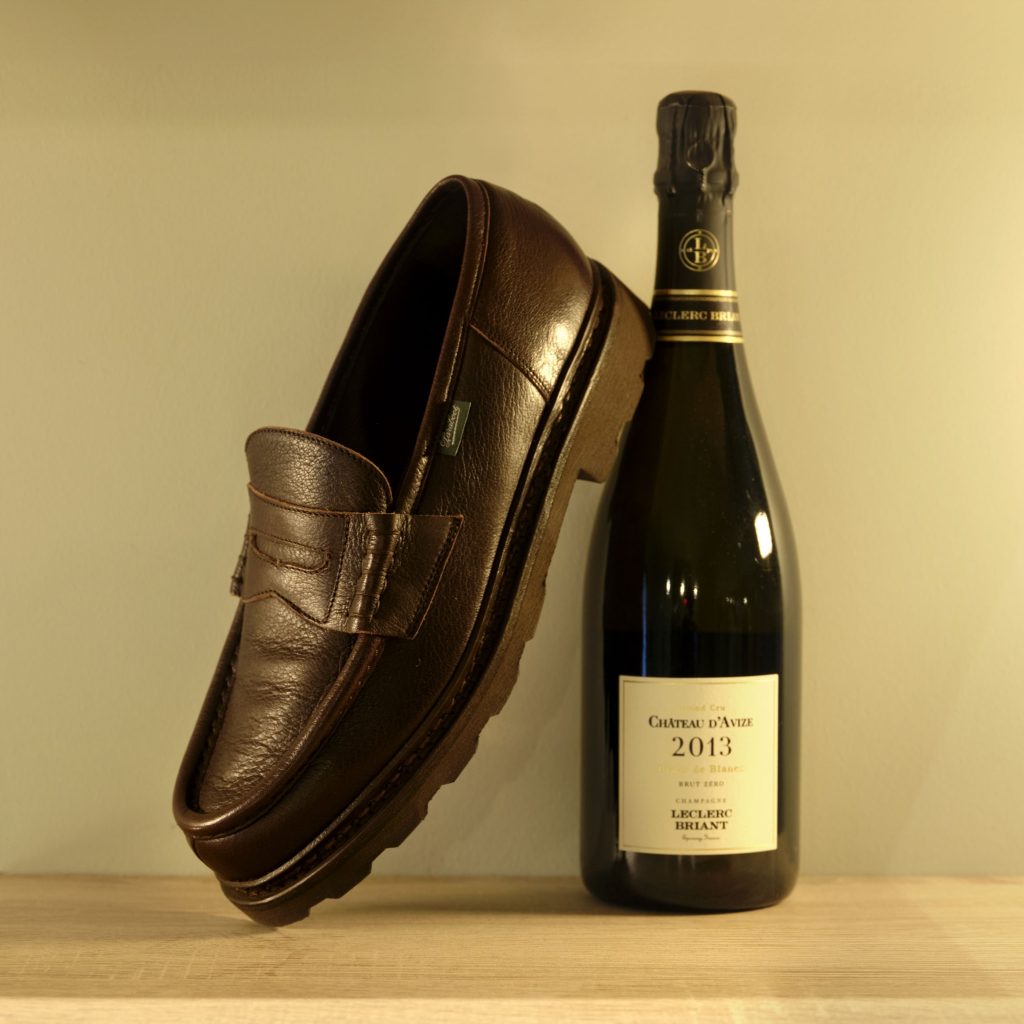
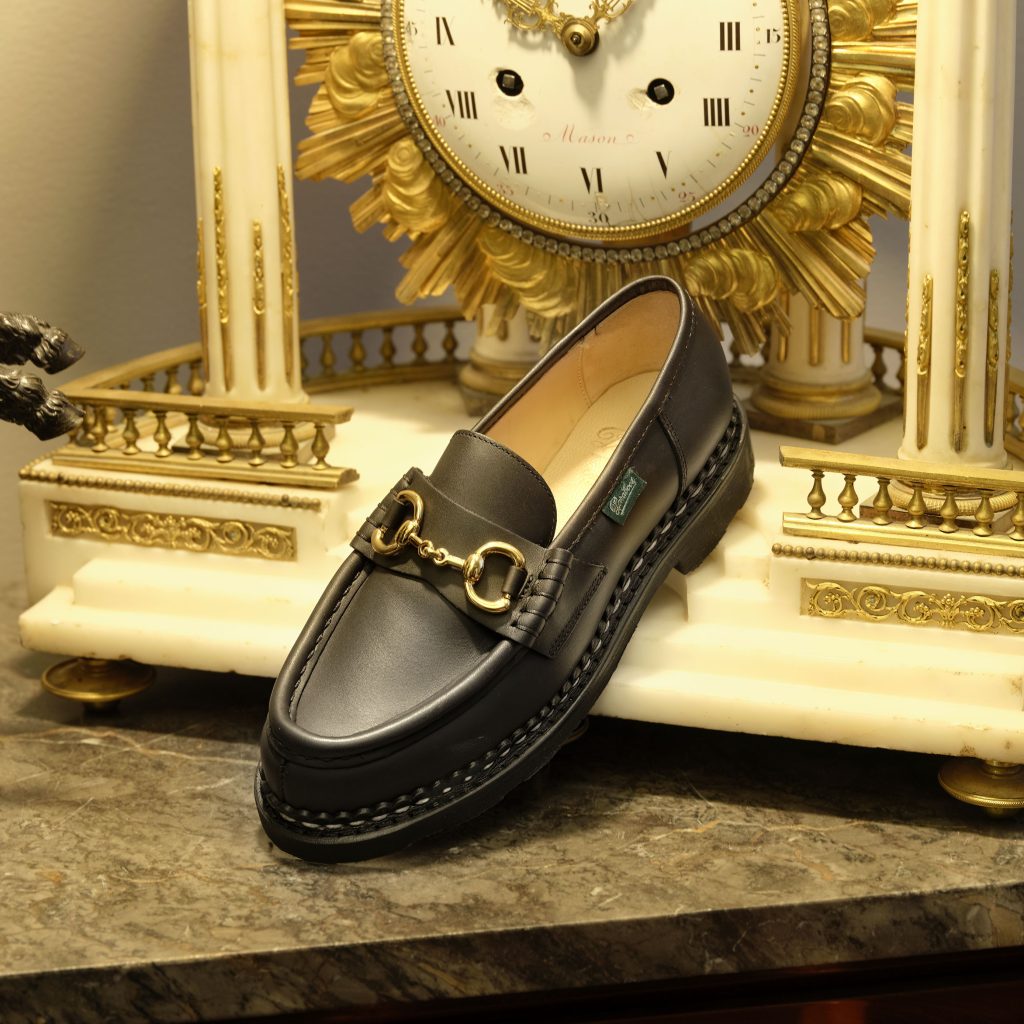
At first glance, a shoemaker, a Champagne winemaker, and an auctioneer seem to belong to worlds apart. Yet a closer look reveals striking parallels. There is the same respect for the material, the same patience, and the same conviction that what is well made is built to last.
Leclerc Briant: The Earth and the Long Term
Founded in 1872 in Cumières by Lucien Leclerc, the house of Leclerc Briant relocated to Épernay in 1955, settling on the Chemin de la Chaude Ruelle. It took its name from the union of Bertrand Leclerc and Jacqueline Briant, who developed it into a “maison de négoce” (a wine merchant house). As early as the late 1950s, Bertrand Leclerc introduced an organic ethos long before the term became commonplace. His son, Pascal, initiated the process of obtaining formal certifications. Today, the house stands as one of the pioneers of biodynamic viticulture in the Champagne region, and its entire vineyard is certified as both organic and biodynamic.
Across its 14 hectares of vineyards primarily Grand Cru and Premier Cru the grapes are selected for their character and their ability to express the terroir. In the cellar, winemaking is gentle and natural, without any adjustments. Then comes time. There is more than one kilometer of cellars dug 35 meters underground, where the vintages age for a long time before being disgorged. At that point, little or no dosage is added. Respect and Singularity are the estate’s two core values. They could be those of any artisan.
Just as leather is chosen for its grain, its suppleness, and the way it ages gracefully, the grape is not merely an ingredient. It is the soul of the final product. Moreover, just like the crafting of a shoe, the creation of a great champagne tolerates neither haste nor carelessness.
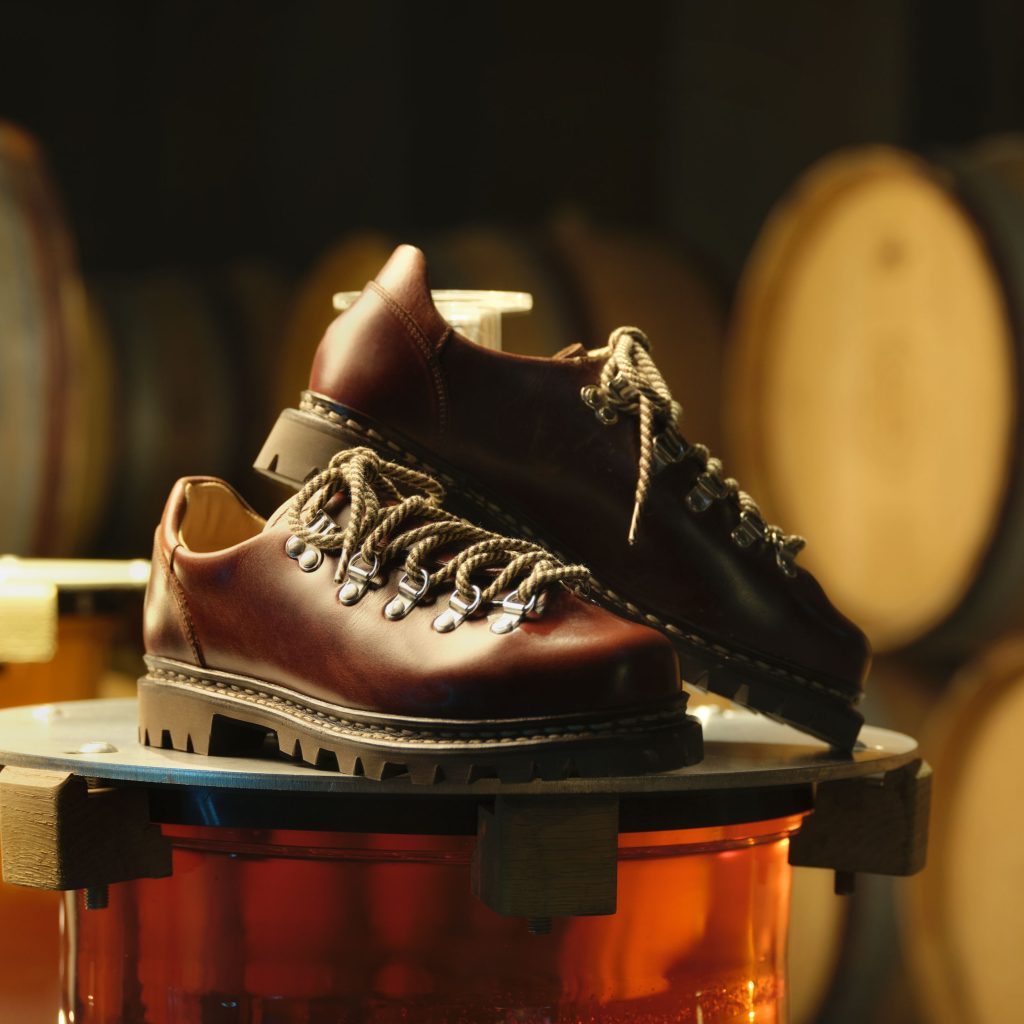
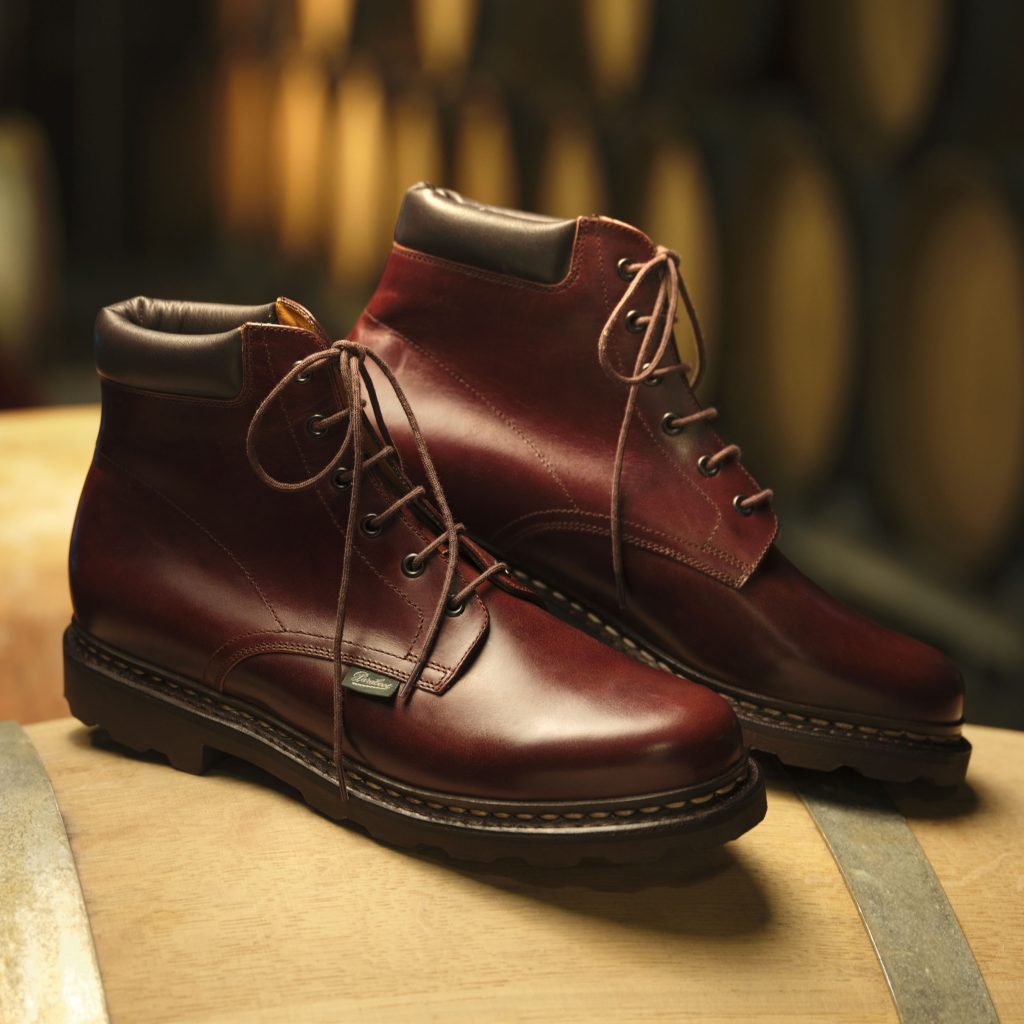
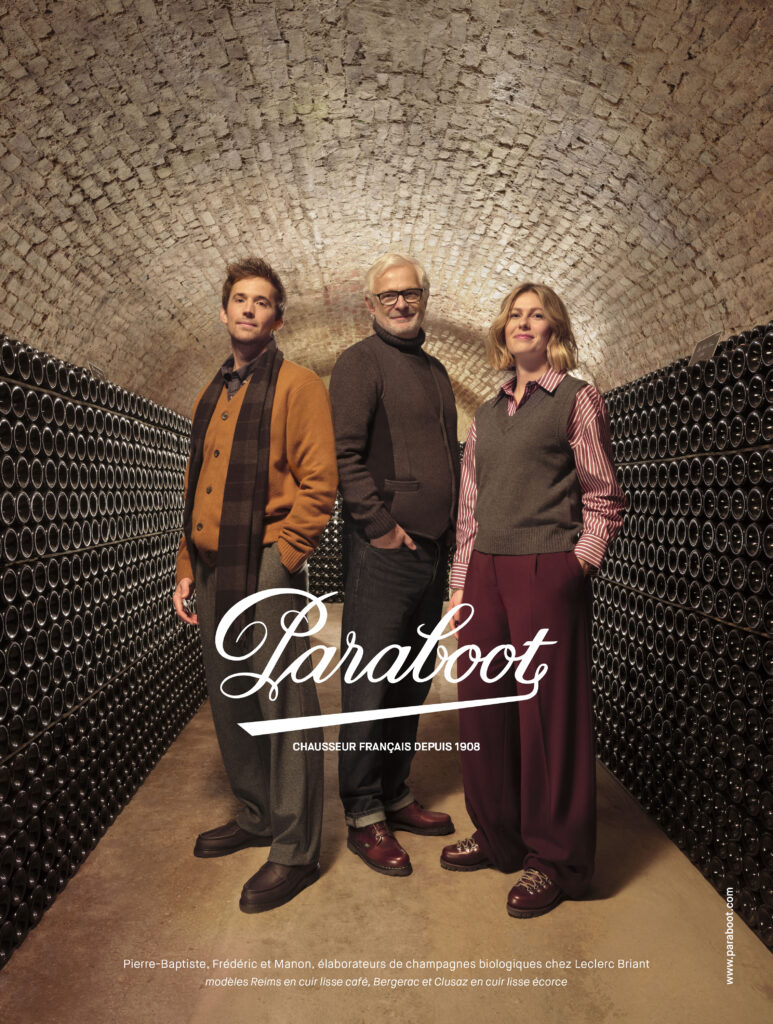
For this campaign, Pierre-Baptiste, Frédéric, and Manon, producers of organic champagne, pose in the heart of the house’s cellars. They stand beneath the stone vault and amid the walls of bottles stored there. They are wearing the Reims models in smooth coffee-colored leather. Additionally, they wear the Bergerac and Clusaz models in bark-colored smooth leather.

Ader: The Memory of Objects
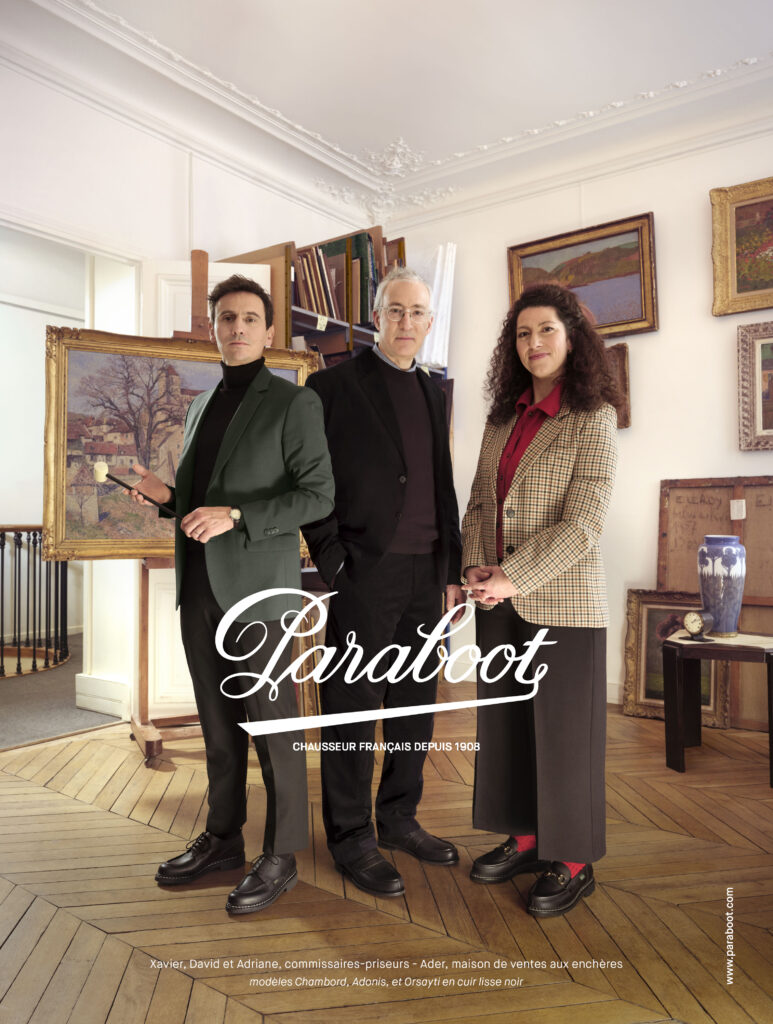
In Paris, the history of Ader dates back to 1692, the year the original firm from which the current house descends was established. Over the centuries, its auctioneers have handled the dispersal of collections belonging to figures such as Frédéric Chopin and Victor Hugo, as well as the jewelry of Sarah Bernhardt. The “Ader dynasty” began in 1931 with Maurice Ader, followed by Étienne Ader. Today, the firm is led by David Nordmann a partner since 2004 and Xavier Dominique, who joined in 2016; its operations are based between the Hôtel Drouot and the Salle Favart. In 2022, two tables by Jean Prouvé were sold there for 3,844,000 euros, setting a world record for the artist.
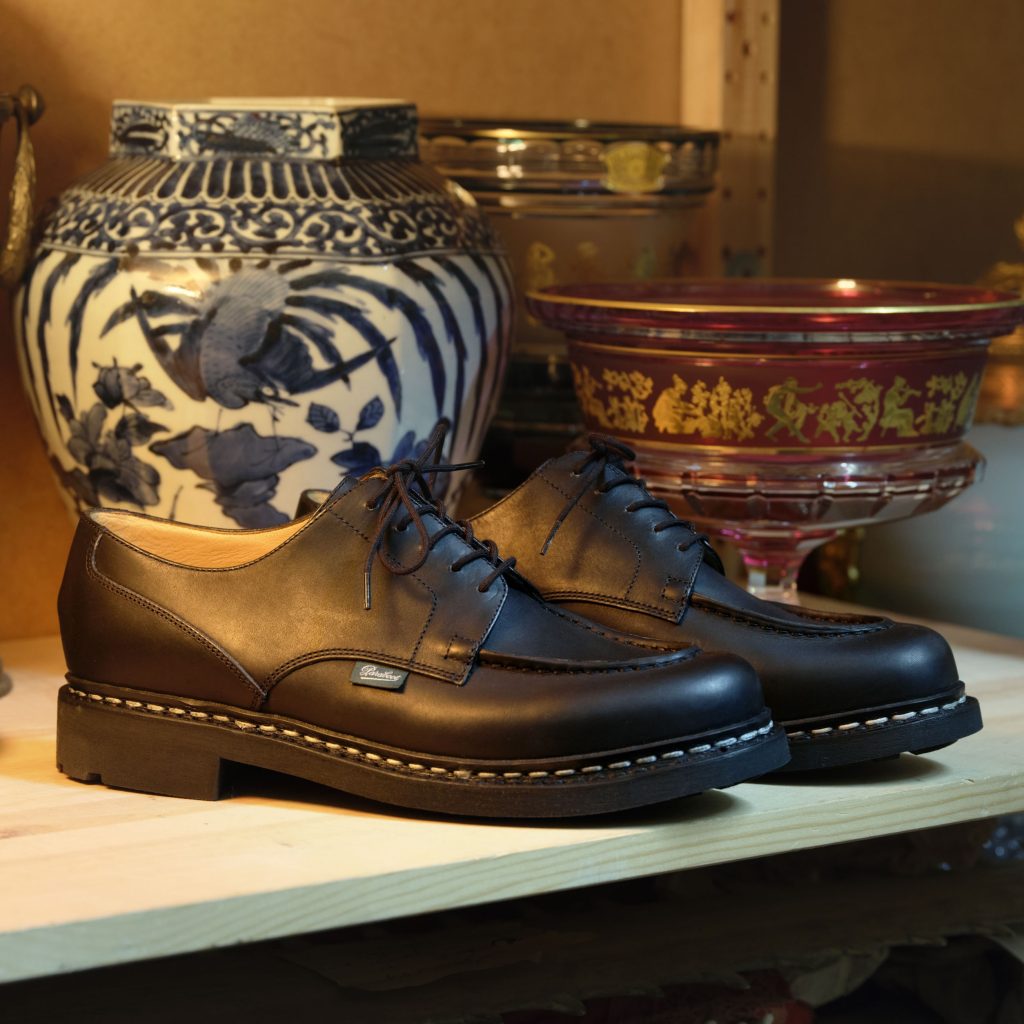
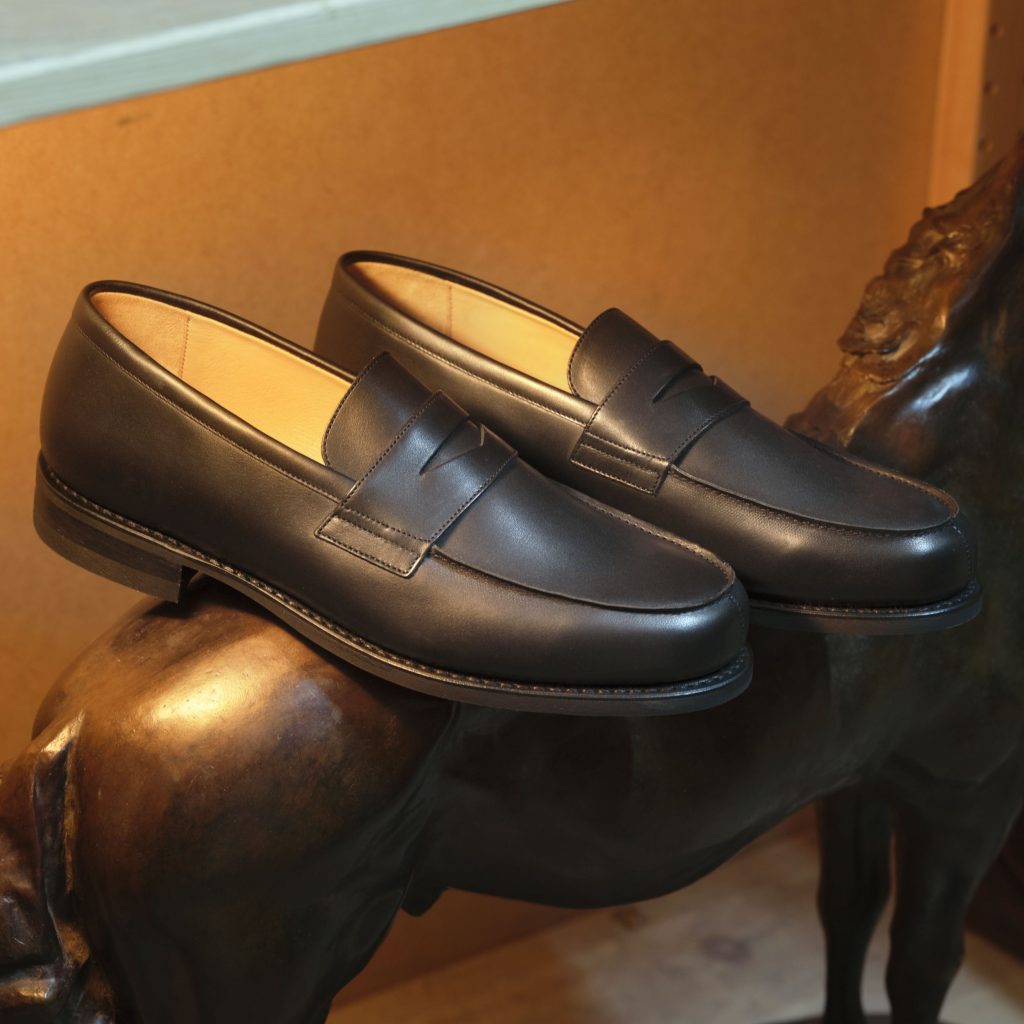
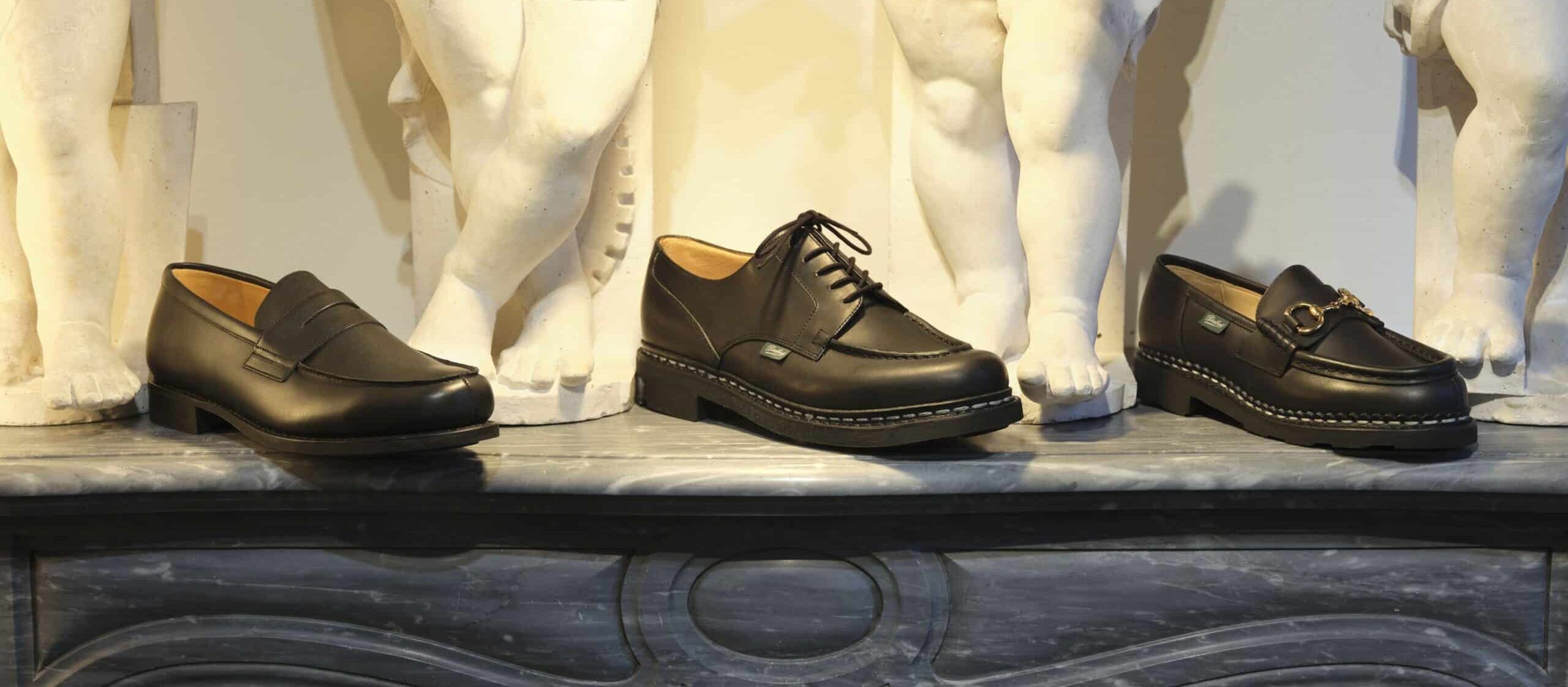
For this campaign, auctioneers Xavier, David, and Adriane pose against a backdrop of wood paneling, paintings, and herringbone parquet flooring. They are wearing the Chambord, Adonis, and Orsayti models in smooth black leather. Here, the artisan’s touch takes on a different form: that of the observing eye, the hand turning an object over, and the research tracing its provenance. Also, every appraisal is a dive into history, and it is culture that nourishes the profession.
What Connects Them
First and foremost, the material is the foundation of authenticity. Leather, grapes, a work of art: each embodies an origin, a history, and a value that cannot be manufactured but is instantly recognizable.
Then there is time, the invisible architect. The time spent aging in the cellar, the time required for patient craftsmanship, and the time involved in each step of crafting a hand-sewn shoe all matter. In these three crafts, quality stems from a series of precise actions and constant attention.
Finally, a connection to the land. Champagne is inextricably linked to its terroir, its seasons, and the people who cultivate it. Art connects us to our history. And since 1908, Paraboot has remained true to its French roots and its workshops at the foot of the Alps.

Objects That Become Memories
A glass filled to the brim, a painting, a statue, a shoe. All are symbols of a moment, a shared emotion, a celebration, or a private confidence. They transcend their original purpose to become companions on our journey, silent witnesses to our lives. For example, a bottle opened to celebrate a birth, a work of art passed down from one generation to the next, a pair of shoes that we have resoled rather than replaced: in each case, the object carries a memory.
Transmission, Heritage, and the Future
All these Workers share a common drive: to pass on their legacy. This includes not only their craftsmanship, but also a philosophy centered on fine workmanship, high standards, and respect for materials and time. At Leclerc Briant, five generations have shaped a company that looks toward the future. At the House of Ader, a history of watchmaking spanning more than three centuries continues to unfold. In the Paraboot workshops, over a century of craftsmanship keeps the art alive.
With this new chapter in the Workers saga, Paraboot celebrates those who, day in and day out, transform their craft into a true mark of expertise defined by precise movements, authentic materials, and a shared passion for durability.